The Science of Shutdown
Understanding Polyvagal Theory, the dorsal vagal response, and why the body chooses to freeze.
The Emergency Brake
Understanding dorsal vagal shutdown requires looking at how the nervous system prioritizes survival above all else. When a threat is perceived as inescapable, the body bypasses standard defensive strategies and initiates a profound system override.
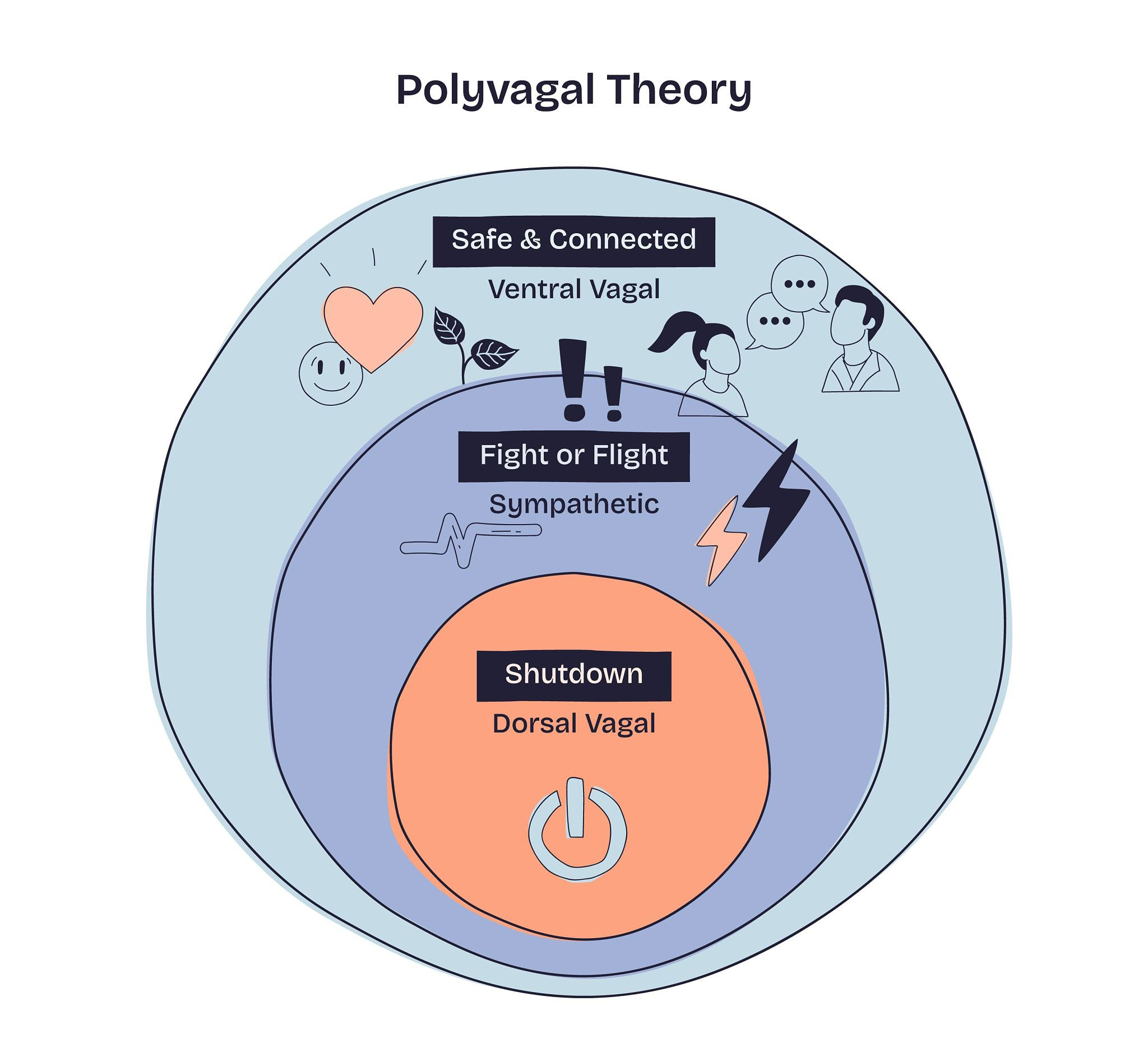
Imagine your nervous system operates on a ladder of defense mechanisms.
When you feel threatened, your first instinct is at the top of the ladder: social engagement. You try to talk your way out of it, seek help, or connect with someone to de-escalate the situation.
If that fails, you drop down a rung to fight or flight. Your body pumps you full of adrenaline and cortisol. Your heart races, your muscles tense, and you are primed to either battle the threat or run for your life.
But what happens if the threat is overwhelming, inescapable, or chronic? What if the "tiger" has you cornered, and neither fighting nor running will work?
Your body pulls the ultimate emergency brake. It drops to the very bottom of the ladder: shutdown. Your brain decides that fighting will only cause more pain and running will just burn precious energy you need to survive. So, it effectively unplugs the system.
In this state, you are the human equivalent of an animal playing possum. You might feel:
- Exhausted, heavy, or physically unable to move.
- Numb or disconnected from your body and emotions (dissociation).
- "Spaced out" or unable to process what is happening.
The Clinical Explanation
From a neurobiological perspective, this mechanism is best explained by Dr. Stephen Porges’ Polyvagal Theory, which outlines the hierarchical function of the autonomic nervous system (ANS).
The ANS regulates unconscious bodily functions and is heavily mediated by the vagus nerve (cranial nerve X). According to the theory, the vagus nerve operates via two distinct pathways with different evolutionary origins:
- The Ventral Vagal Complex (VVC): The newer, myelinated pathway responsible for mammalian social engagement, safety, and a calm physiological state.
- The Dorsal Vagal Complex (DVC): The evolutionarily older, unmyelinated pathway that connects to subdiaphragmatic organs (stomach, liver, intestines).
When the nervous system detects a life-threatening scenario (neuroception) and the sympathetic nervous system (which drives the high-arousal "fight or flight" response) is insufficient to ensure survival, the body shifts dominance to the unmyelinated DVC.
The Physiological Cascade
Activation of the dorsal vagal complex triggers extreme parasympathetic overactivity (hypoarousal). The physiological markers include:
- Bradycardia: A severe drop in heart rate.
- Hypotension: Lowered blood pressure, which can lead to vasovagal syncope (fainting).
- Metabolic Conservation: Shallow breathing and depressed gastrointestinal motility to conserve oxygen and metabolic resources.
- Analgesia: The release of endogenous opioids to raise the pain threshold in anticipation of physical injury.
The Psychiatric Manifestation
Clinically, a dorsal vagal shutdown presents as behavioral immobilization. The higher cognitive functions of the cerebral cortex go offline, leaving the individual in a state of profound dissociation, emotional blunting, mutism, and somatic numbing.
In trauma therapy, recognizing a dorsal vagal state is critical because the patient cannot simply "talk" their way out of it; the body must be gently guided back up the autonomic ladder into sympathetic mobilization before it can return to a state of ventral vagal safety.